Reps Plenary Turns Rowdy Over Debate On Suspension Of Constituency Project Payment
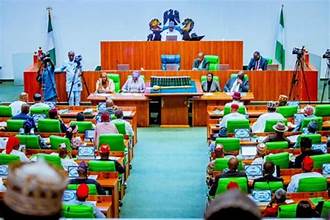
Proceedings in the House of Representatives turned rowdy on Wednesday as lawmakers clashed over a motion on the suspension of payments for Zonal Intervention and Constituency Projects.
The motion, sponsored by Alex Ikwechegh, raised concerns over delays in the release of appropriated funds, unpaid contractor liabilities and the slow implementation of the 2026 budget.
He warned that the development was slowing critical projects and increasing the financial burden on contractors.
The motion generated heated exchanges on the floor, with lawmakers sharply divided over the issues raised before it was eventually adopted by the House.
During the debate, Ikwechegh urged President Bola Tinubu to personally engage the House on the slow pace of budget implementation.
The Speaker, however, ruled out the proposal to invite President Bola Tinubu to appear before the House, explaining that the request was not included in the motion submitted to him as the presiding officer and was therefore unparliamentary.
Speaker Tajudeen Abbas ruled on a personal explanation raised by Benedict Etanabene, who challenged the Treasury Circular suspending payments for constituency projects and called for its immediate suspension.
He also urged the House to invite President Bola Tinubu and members of his economic team to explain the slow implementation of the budget.
The House subsequently urged the Federal Ministry of Finance, Budget Office, Office of the Accountant-General of the Federation and the Central Bank of Nigeria to fast-track the release and cash-backing of appropriated funds and ensure the prompt settlement of verified contractor liabilities.
Lawmakers also directed the Accountant-General of the Federation to review the June 29 Treasury Circular on constituency projects to eliminate delays caused by additional verification requirements.
To strengthen oversight, the Speaker announced the constitution of an ad hoc committee to engage relevant fiscal authorities on budget releases, contractor payments and the utilisation of approved borrowings, with a report expected within four weeks.
Related Articles
The following 6 pages may interest you as well: